Pydhonie
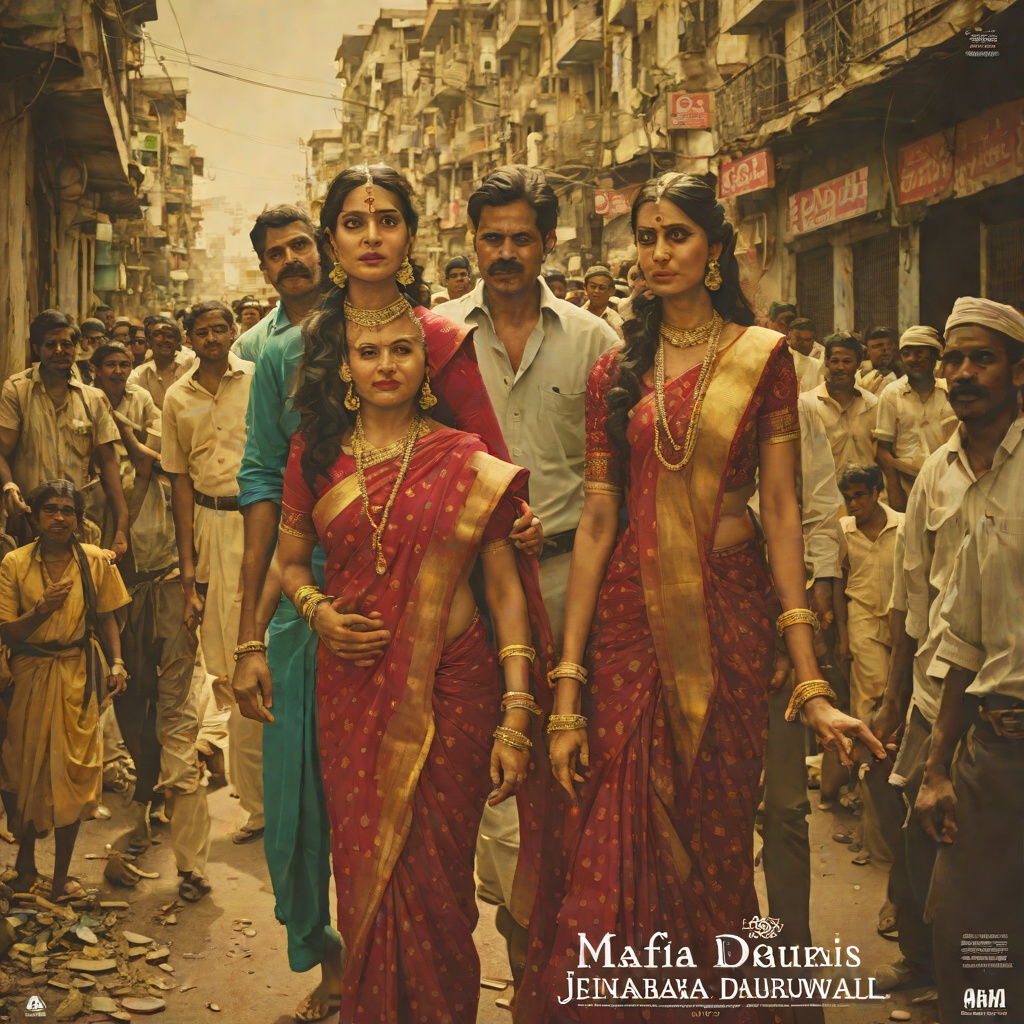
Mafia Queens of MumbaiPydhonie is a historic junction and police district in Mumbai that recurs throughout the book as a dividing line between communities, a site of police violence and resistance, and a meeting point between the criminal underworld and the state. It is where Jenabai Daaruwali led her peace march during the 1993 riots, where Hussain Ustara lived as a renegade against Dawood, and where Jenabai allegedly complained of police harassment to the chief minister. The location's significance lies in its role as a symbolic and literal crossroads where the book's themes of communal conflict, female agency, and the entanglement of crime and law enforcement converge.
Geography and Setting
Pydhonie sits at a junction that the book describes as the dividing line for two wounded communities during the 1993 riots. The Hamidiya Masjid stands on the right, the Khatri Masjid on the left, and three Jain Derasars complete the religious landscape. The Pydhonie police station, a gift of the British era, stands at right angles from these religious houses, physically embodying the state's presence at the heart of communal space. The area is close to Dongri, which was initially part of the original island of Mumbai stretching from Malabar Hill to the Dongri hills, and which became a low-lying patch of uneven land between Crawford Market in the north and the reclaimed lands of Kamathipura in the south after the hills were levelled in the mid-1700s. This geography places Pydhonie at the intersection of several of the book's key locations: the grain markets of Daana Bazaar, the red-light district of Kamathipura, and the Muslim-dominated lanes of Dongri.
The Peace March of 1993
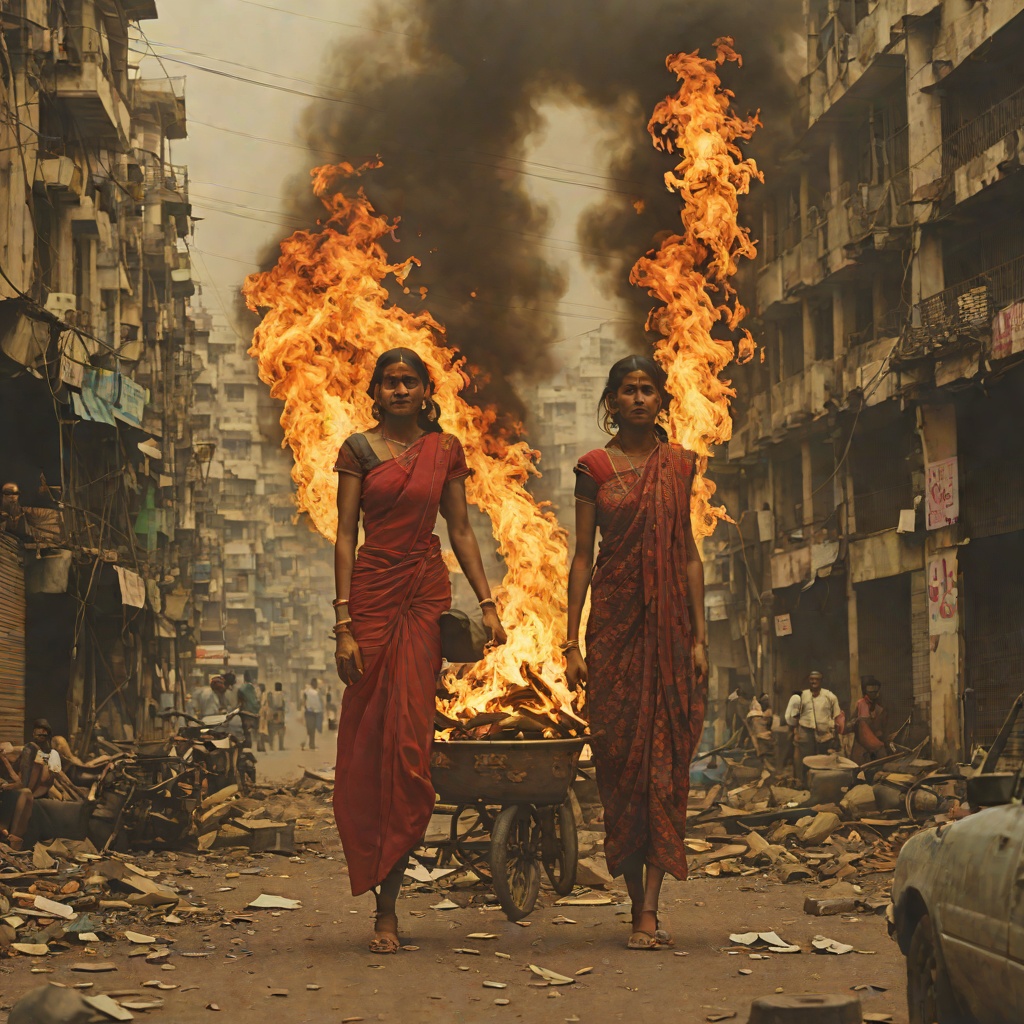
Pydhonie's most dramatic moment in the book comes during the 1992–93 Bombay riots, when Jenabai Daaruwali, the elderly bootlegger and former grain smuggler, led a peace demonstration through its streets. The immediate trigger was the Suleman Usman Bakery firing on 9 January 1993, when the Special Operation Squad, suspecting terrorists were holed up on the bakery's terrace, opened fire inside and killed nine Muslims without apprehending any terrorists or seizing any firearms. Jenabai had peered through her windows and heard the gunshots and helpless cries from inside the bakery, making her a spectator to what the book calls one of the most gruesome and unwarranted killings by the police. Despite warnings from the forces, she stepped out in her long white chikan nightgown and a shawl covering the grey in her hair, a fair and heavily jewelled lady with a rosary in one hand and a white flag in the other. Within seconds, a group of young men gathered behind her as she led the demonstration, walking between the torched lanes of Dongri towards the Pydhonie junction, unconcerned about danger.
When she reached the junction, she stopped. Here she stood, flanked by hundreds of young men and women, waving her flag and screaming for peace and harmony even as injured bodies lay strewn and mobs openly ransacked shops in the vicinity, setting them on fire. The police with their lathis and shields began closing in towards the demonstrating crowd. Her tired old legs had given in, but Jenabai stood calm, unafraid of the mob fury and the police lathis. From behind her, supporters screamed loudly, 'Jenabai zindabad! Jenabai zindabad! Jenabai zindabad!' The scene transforms Pydhonie from a mere geographical marker into a stage for subaltern resistance, where an elderly woman's body becomes the last line of defence against communal violence and state brutality alike.
A Meeting Point of Crime and State
Pydhonie also functions as a meeting point between the criminal underworld and the state. It was here that Hussain Ustara, the renegade gangster who knew everything about Dawood and hated him, lived with his own gang. When Ashraf Khan sought help against Dawood after the killing of Mehmood Khan, it was Usmaan who directed her to Hussain Ustara in Pydhonie, describing him as a renegade with his own axe to grind against Dawood, a man who knew how to use weapons and might help her. The location thus becomes the residence of the one figure willing to stand against the most powerful don in Mumbai, a counterpoint to the police officers who, as Usmaan warned, were on Dawood's pay-roll.
The area's police station also features in Jenabai's earlier career. Unconfirmed accounts state that after her arrest for bootlegging, Jenabai approached the then chief minister Yashwantrao Chavan with grievances of harassment by the Pydhonie and V.P. Road police. She is said to have played on her poverty, her children, and how she was trying to make ends meet. What transpired at the meeting remains unclear, but after it, Dongri's most fearless woman apparently moved on to become a police informant. This episode links Pydhonie to the book's broader theme of the ambiguous relationship between women criminals and the law, where harassment and informancy, victimhood and agency, are inextricably intertwined.
Narrative Significance
Pydhonie's recurring presence across the book's disparate stories gives it a structural role as a connective tissue between the lives of different women criminals. It appears in the context of Jenabai's grain smuggling and police harassment, in the communal violence of 1993, and in the underworld politics of Dawood's rivals. The location embodies the book's central argument that these women were not blank slates written upon by dangerous male mafia members, but active agents who pushed the boundaries of dominant moral codes. Jenabai's peace march at the Pydhonie junction, in particular, stands as the book's most powerful image of a woman criminal transcending her criminal identity to become a moral leader of her community, using the very space where the state's power was concentrated to challenge both the mob and the police. The junction, with its mosques, Jain temples, and British-era police station, becomes a microcosm of Mumbai itself: a place where religion, crime, and state power collide, and where an elderly woman in a nightgown could momentarily hold them all at bay.